YOUR CART
- No products in the cart.
Subtotal:
€ 0






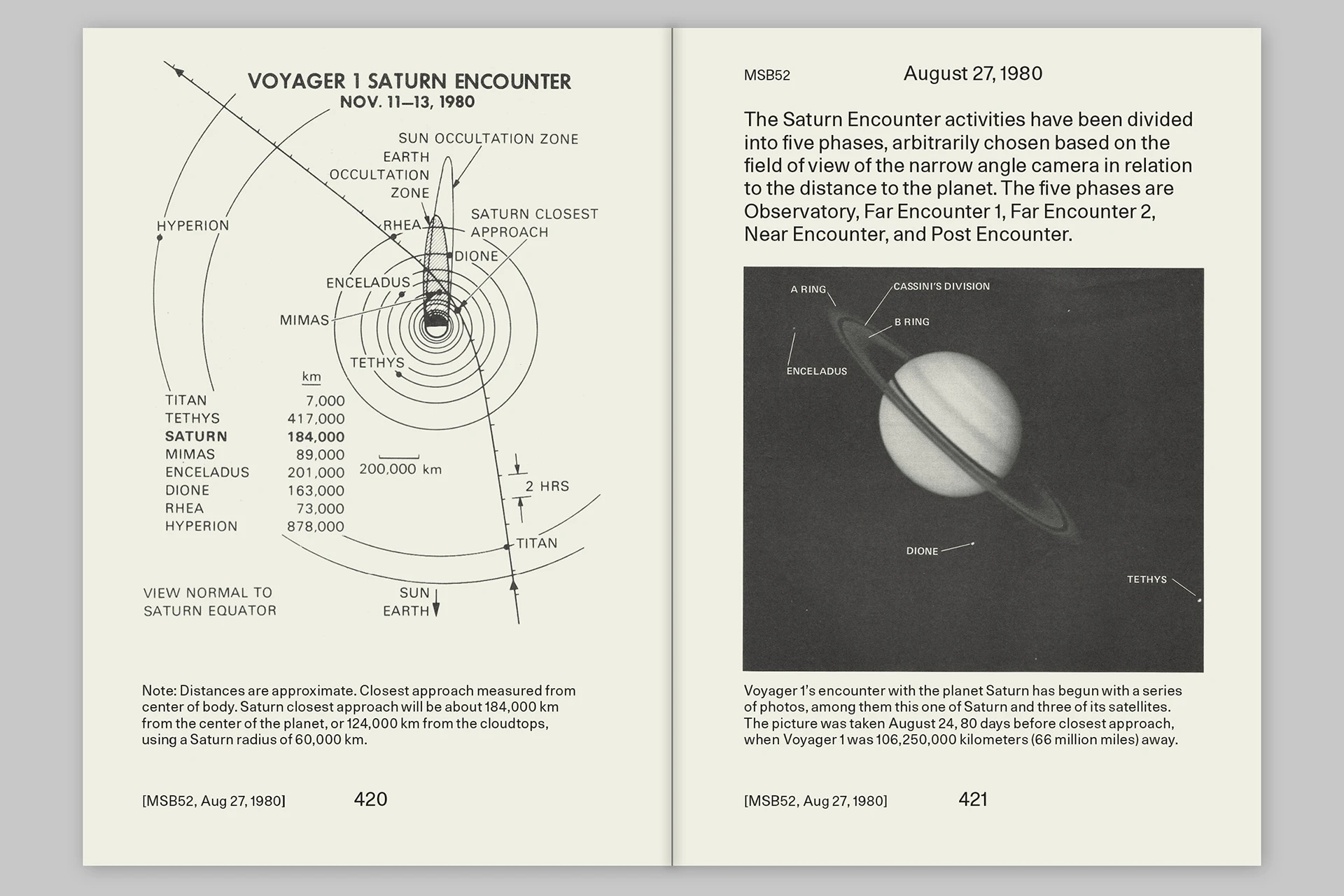

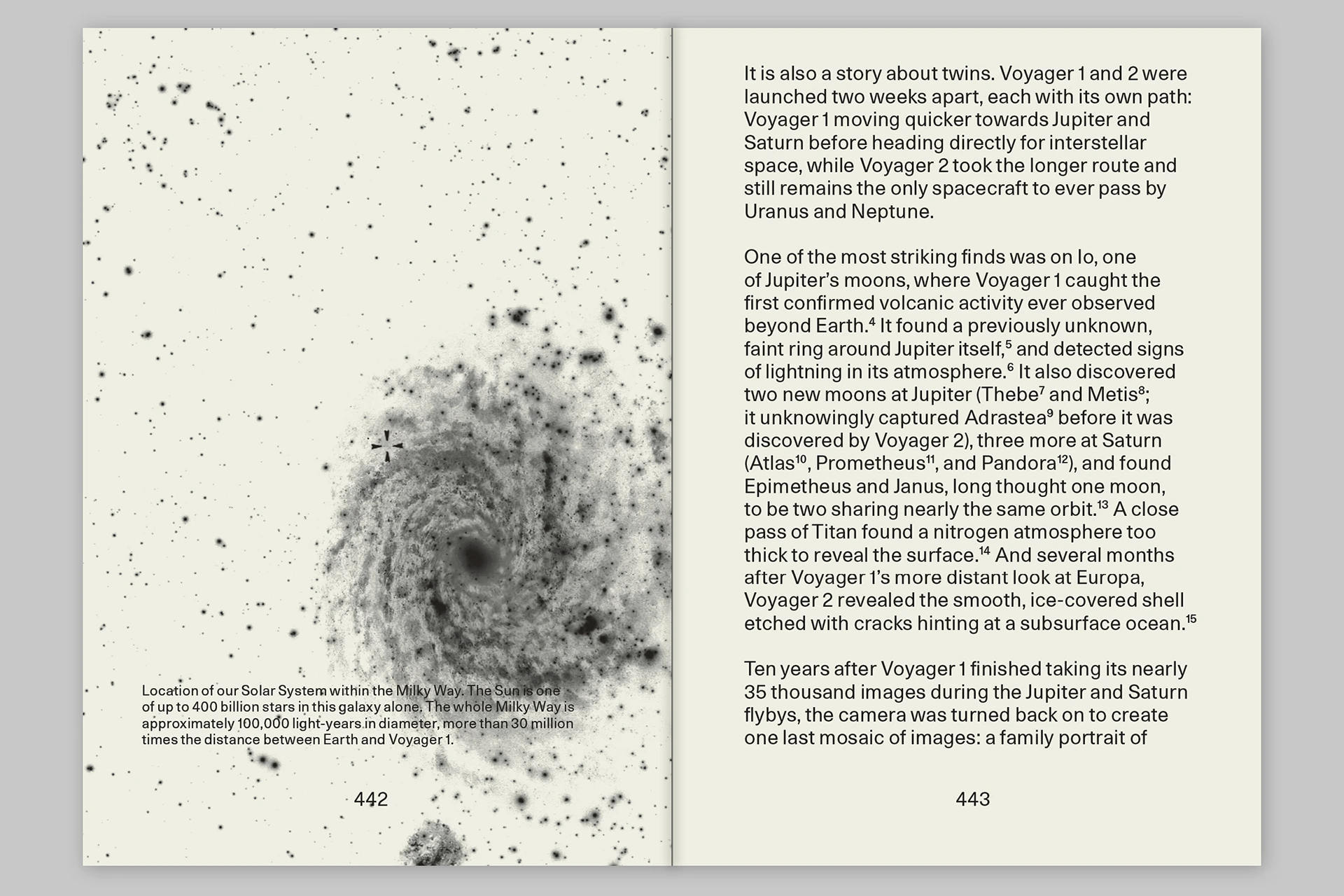
Images and text excerpts:
NASA / Jet Propulsion Laboratory
Concept, design, edit and epilogue:
Carel Fransen
Tim Zwiep
Print and binding:
Wilco Art Books (NL)
For almost fifty years, Voyager 1 has been traveling through space. Launched by NASA in 1977 to study the outer planets, it flew past Jupiter and Saturn and their many moons. After that the road was mostly dark, as the influence of our Sun slowly lessened until it lost its grip on the probe entirely. It is now moving at 17 kilometres a second through the vast emptiness of interstellar space. Still closer to our Sun than to any other star, and still in the same tiny quarter of one of the outer arms of our Milky Way.
On November 18, 2026, Voyager 1 will be exactly one light-day away from Earth, roughly 26 billion kilometers. That is the equivalent of the distance travelled in a day at the speed of light. It is the furthest man-made object from Earth by a large margin. Launched in 1977, a couple of weeks after its brother Voyager 2, it was intended to be the first to take clear photos of Jupiter, Saturn, and several of their many moons, before heading straight toward the edge of our Solar system. Despite its enormous speed, it would still take more than 30 years to feel the effects of the change in magnetic fields that symbolise the lessening grip of our Sun.
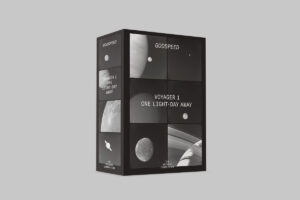
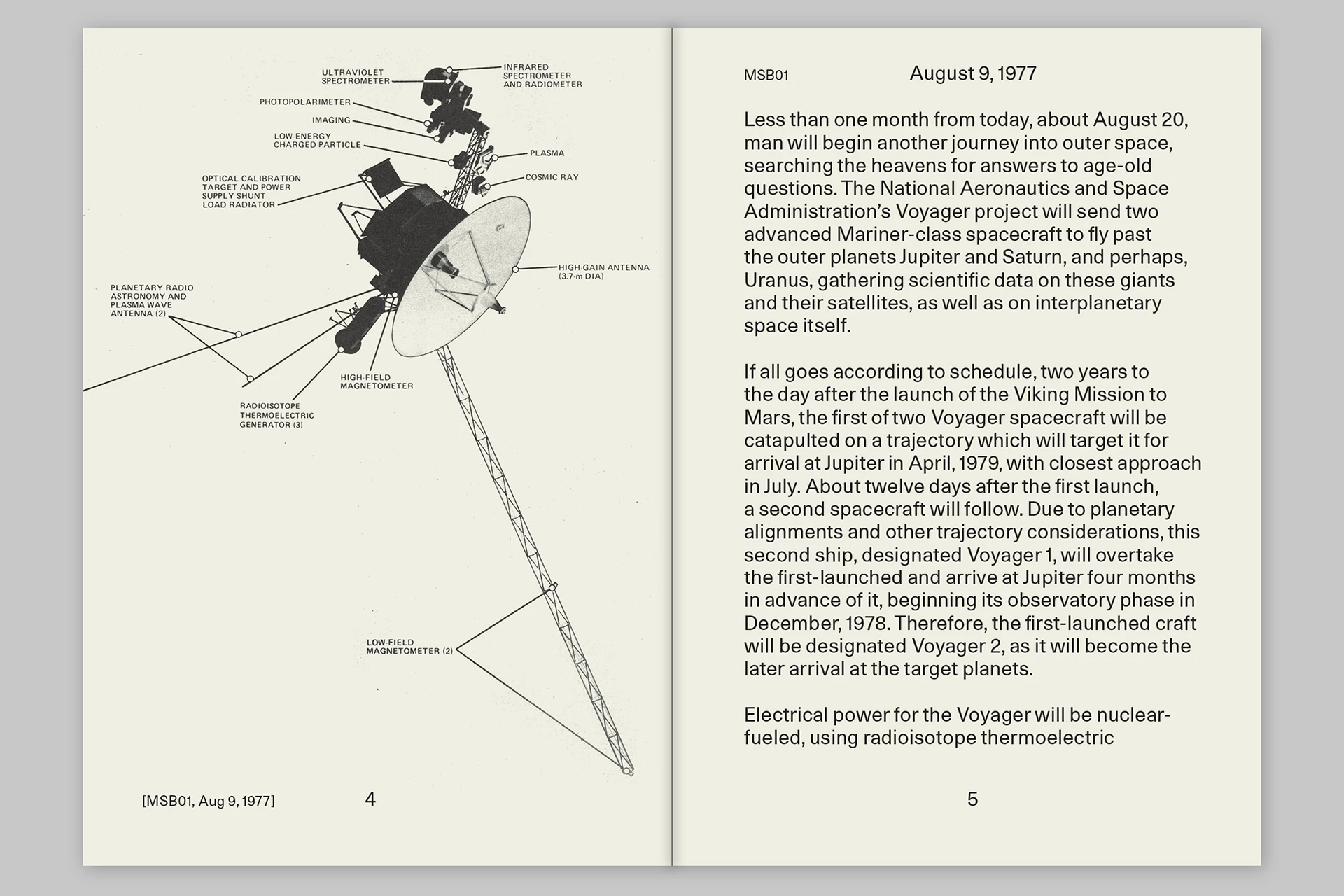
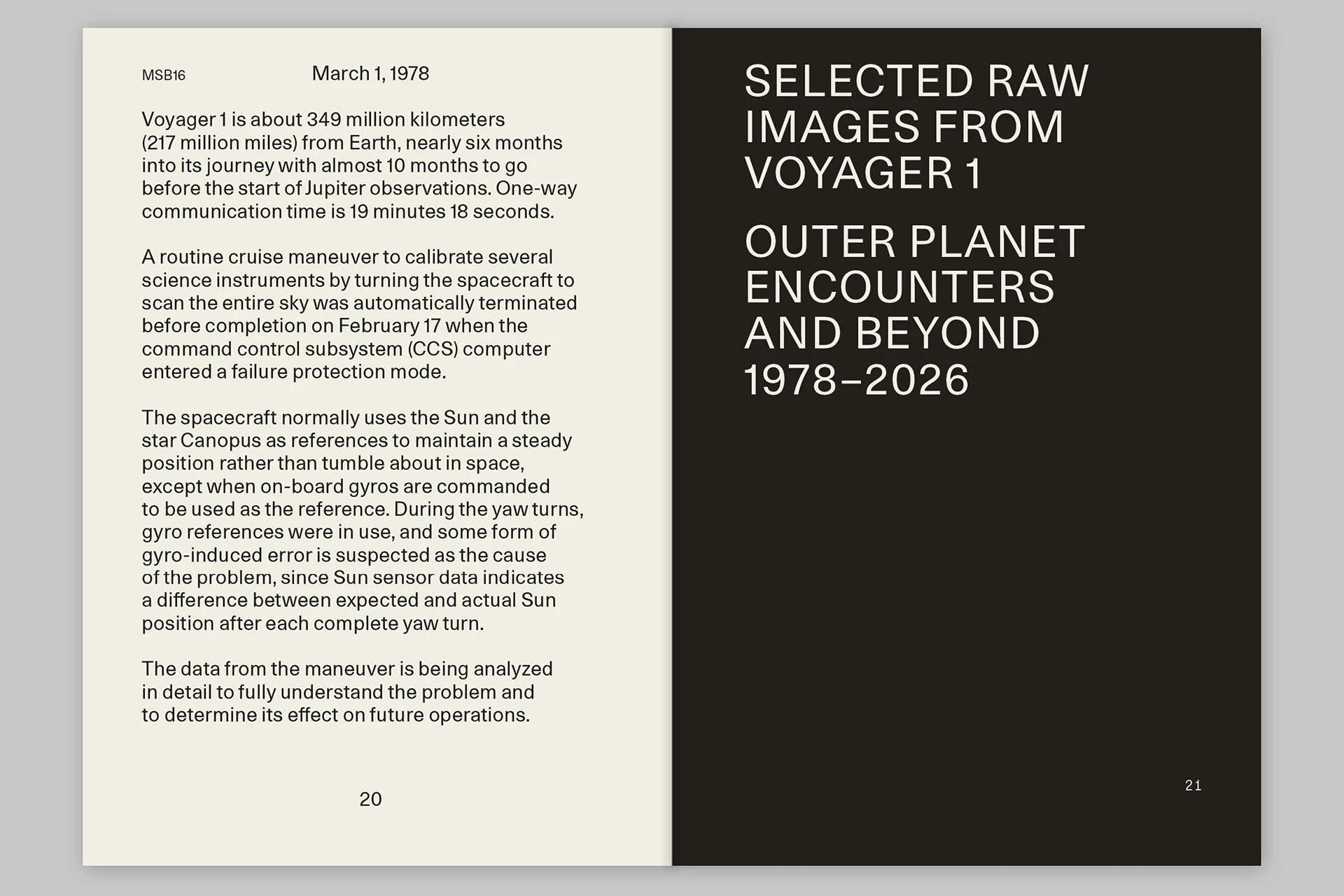
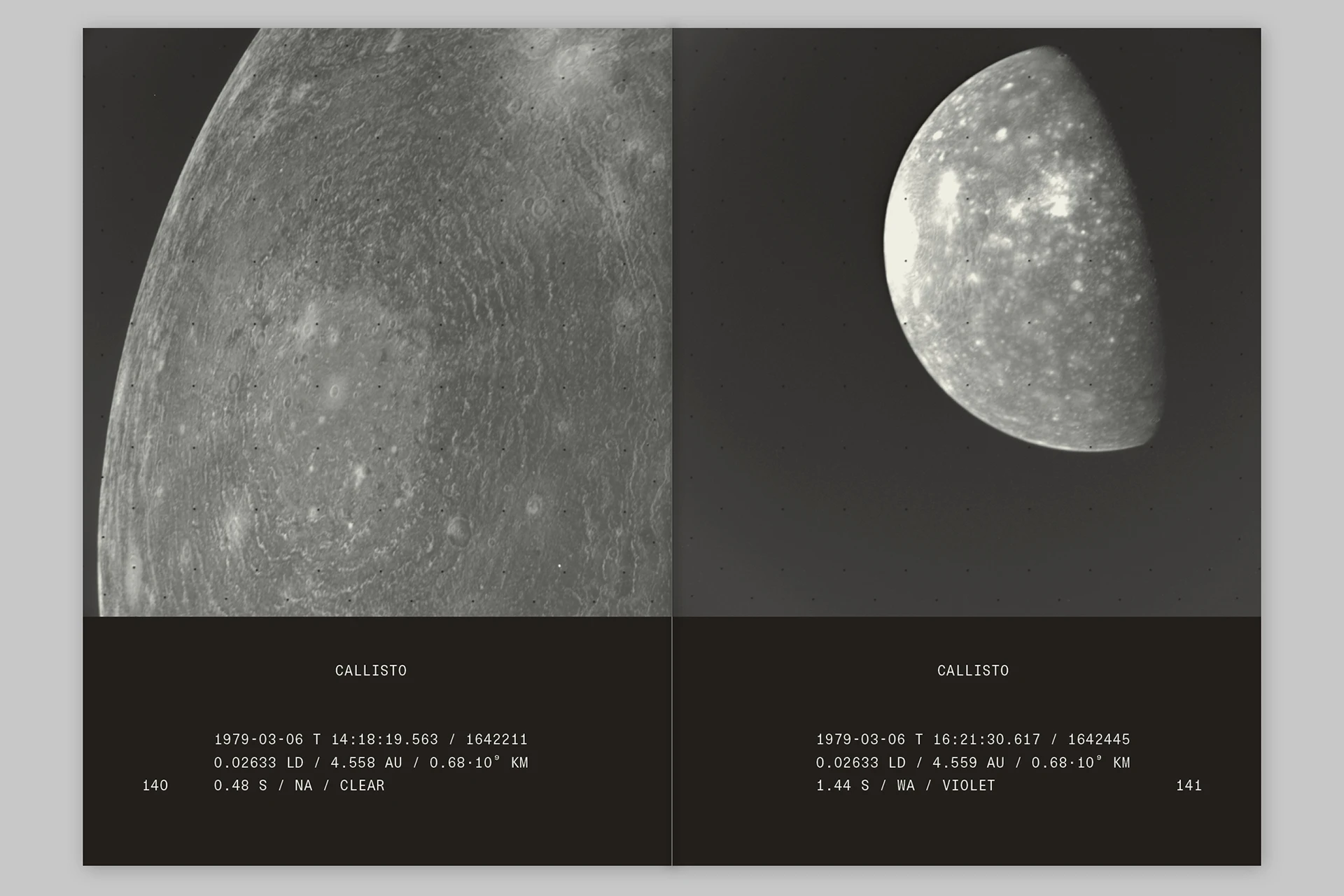
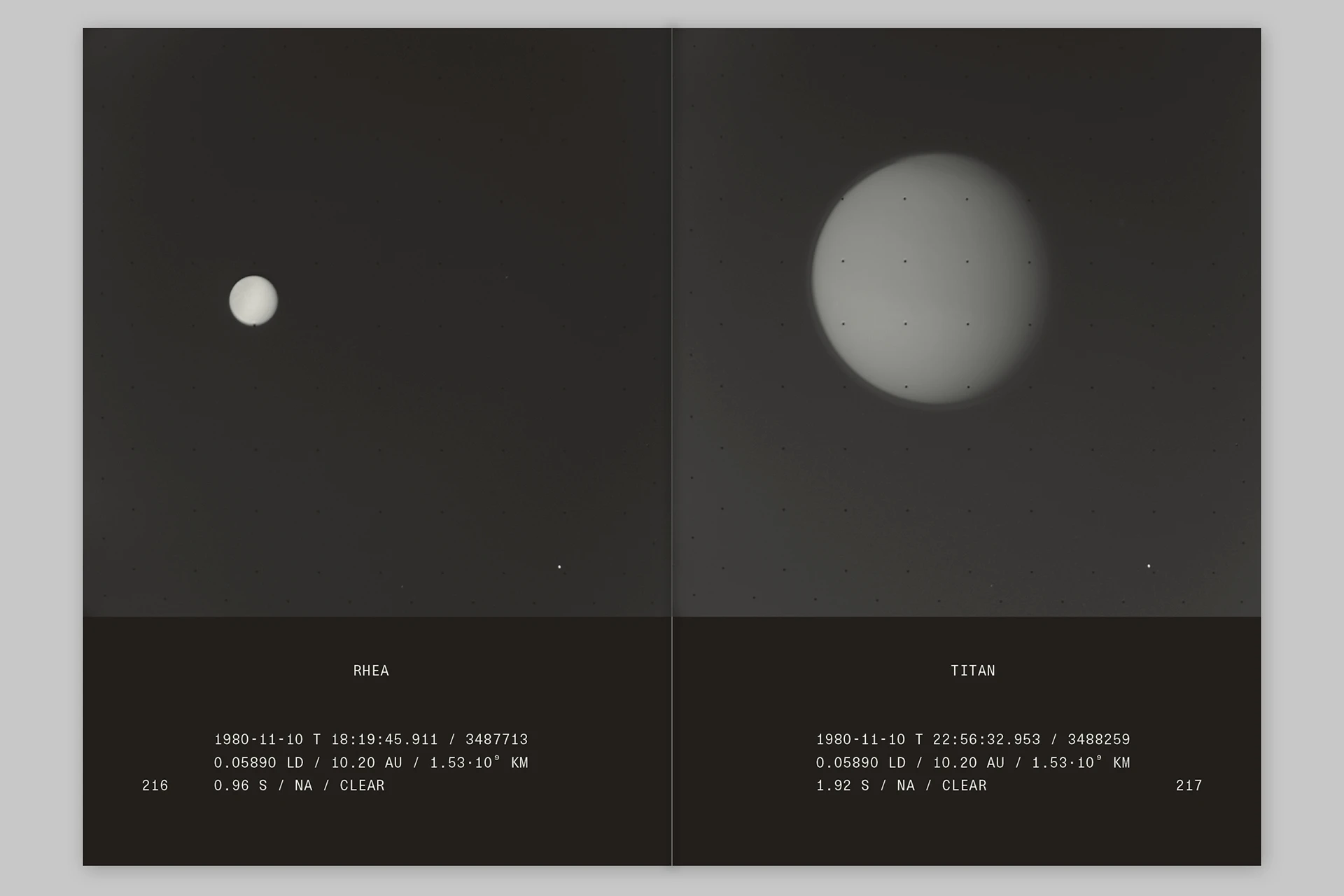
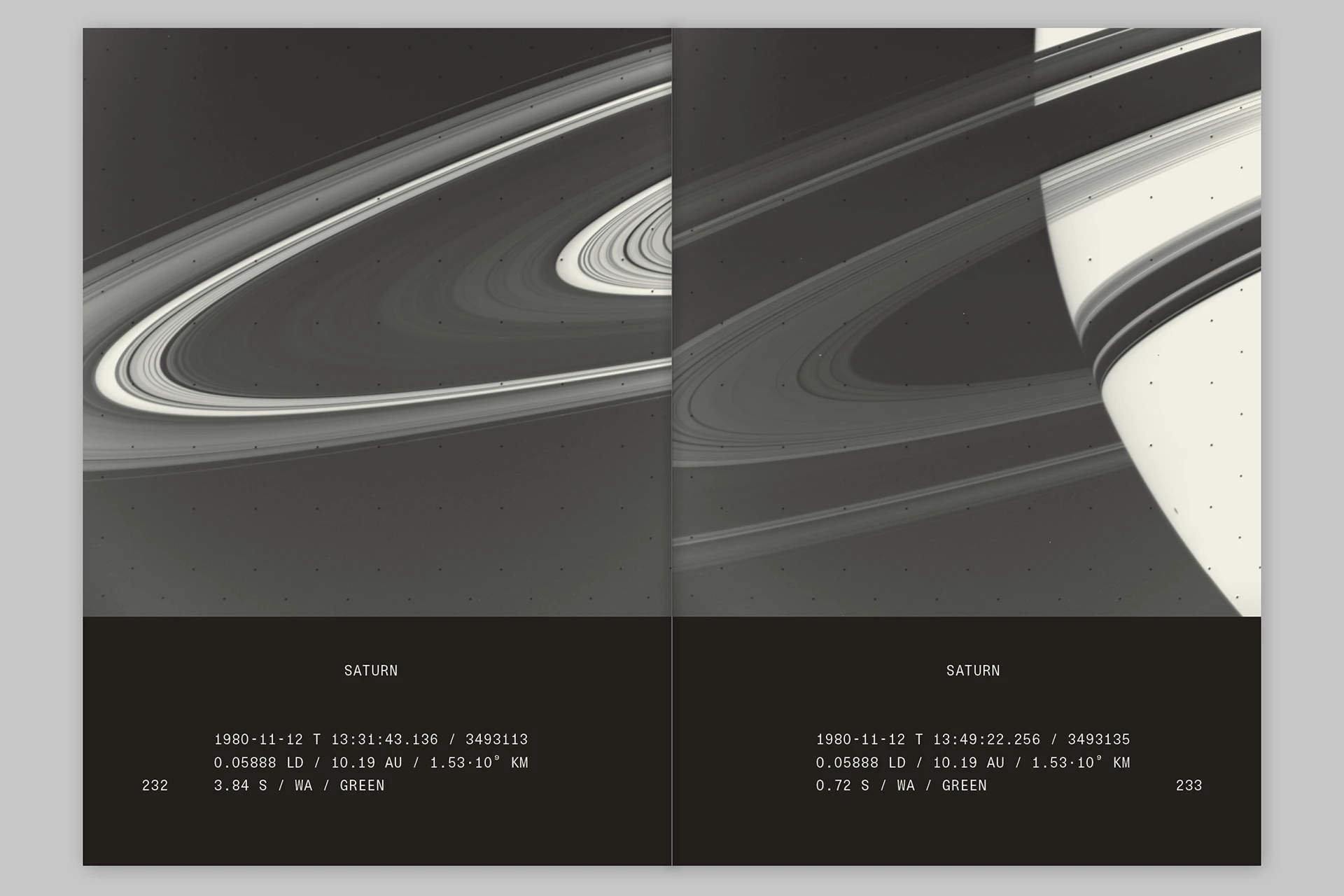
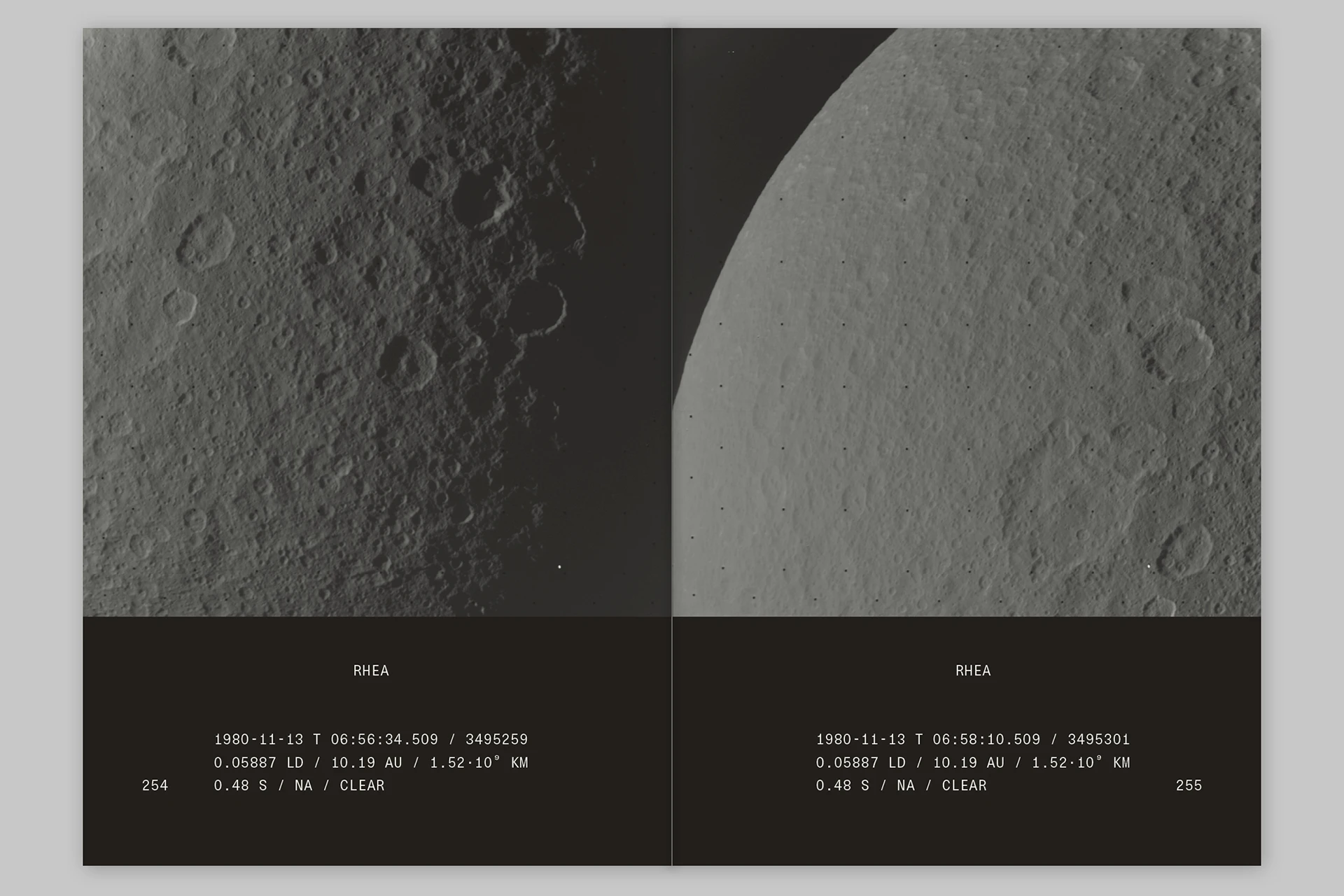
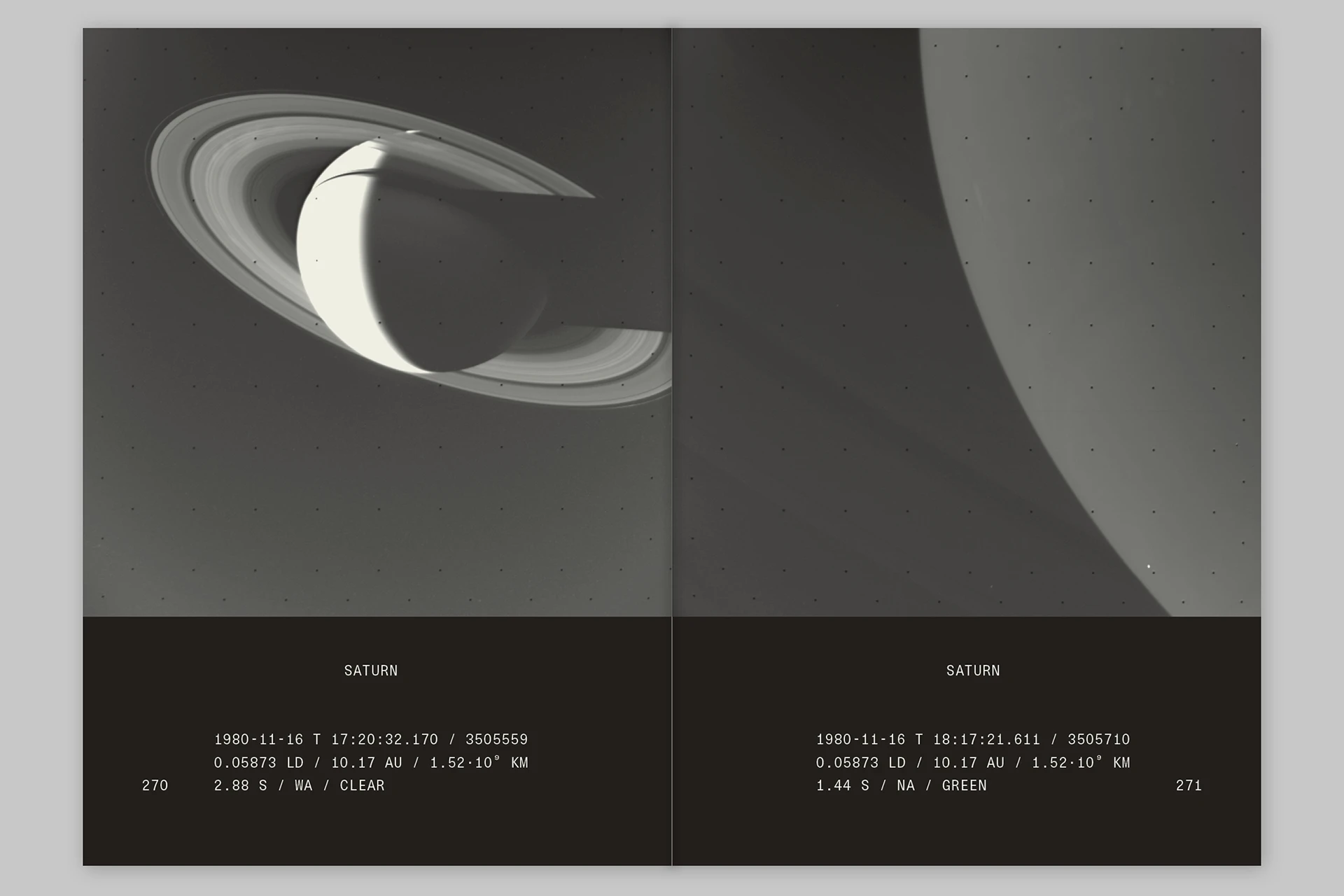
Godspeed – Voyager 1: One Light-day Away is an ode to the spacecraft by graphic designers Carel Fransen (NL) and Tim Zwiep (NL), and to the fact that its messages can still reach us on Earth. The book consists of a selection of the raw, unedited photographs taken along its flybys of Jupiter and Saturn, all in chronological order, so you can relive the experiences of the probe through its own ‘eyes’. From Jupiter coming into focus to Saturn slowly disappearing, and views of Callisto, Io, Rhea, Titan and several other moons in between. The last section of the book is completely black, symbolising the enormous distance it travelled after the camera turned off in 1980, only three years into its voyage. The book includes a short history of the Voyager project through excerpts from the Voyager Mission Status Bulletins published between 1977 and 1998.
Running on computer memory that could hold no more than a few photo thumbnails, Voyager 1 was expected to stop communicating with the scientists on Earth well before it reached the edge of our Solar system. But against all odds, almost fifty years later it still sends data back, requiring the most sensitive equipment on Earth to listen to its voice through all the background noise. But there are no more photos. After leaving Saturn behind, the camera was turned back on only once, in 1990, to take a family portrait of our Solar system. One of the photos showed a tiny speck of light in the distance. It was the ‘Pale Blue Dot’: one last view of Earth, illuminated by the Sun, as a final goodbye. Godspeed.

Unraveling a family secret, exploring how a grandfather’s disappearance left traces that continue to shape three generations.

Examining the representation of gender-based violence in the history of Western art, raising pressing questions about power and presentation.

A hidden pet cemetery in San Francisco becomes a moving portrait of love, remembrance, and the lasting bond between people and their pets.